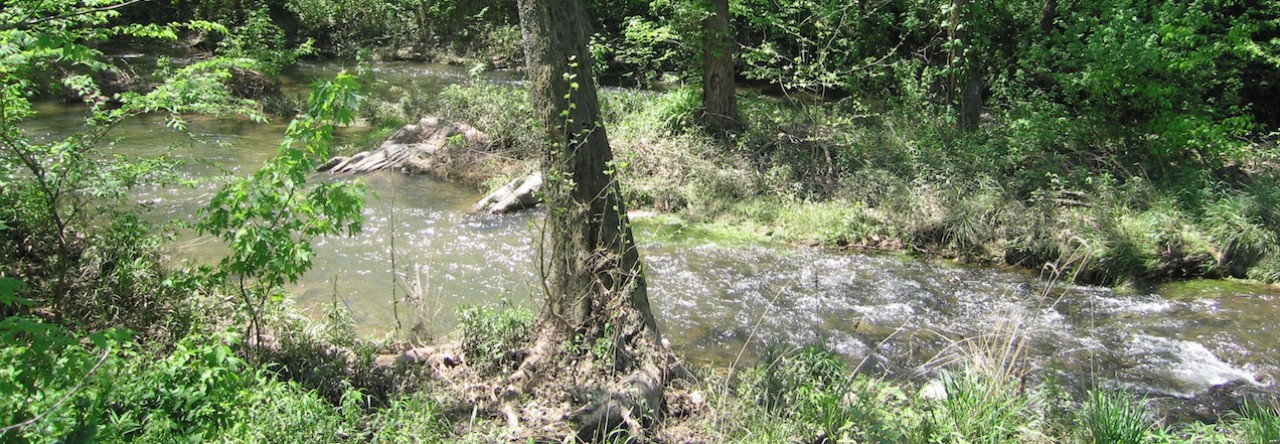
Sørina Higgins ran a photo contest for pictures of her book The Inklings and King Arthur at Mythmoot. I almost won. Apparently visual interest and well-thought-out composition count more towards photographic artistry than bad puns. Congratulations, Tom!
Category: scholarship Page 3 of 7
A lot of Mythmoot V was recorded on video and will be posted to the Signum University channels on Twitch or YouTube, so I’m not going to do a full recapitulation this year. I’m just going to mention some talks where I have something to say. The Sunday morning paper session is one such.
Luke Shelton – Young Readers’ Receptions
Luke walked us through one of the survey methods he’s using in his dissertation research. He’s studying how young readers respond to The Lord of the Rings. One example of his methods is called “diamond-ranking”. You can see a diagram in the video, but essentially it’s a way of measuring readers’ reactions that takes account of the fact that people are generally pretty clear about the best and worst of a group, but don’t make such big differentiation in the middle. His example question was “Which members of the Fellowship do you feel positive about, and which negative?”
He passed out cards with the names of the Fellowship of the Ring on them, and split us into two groups to do the ranking. Interesting debates ensued, where “interesting” is defined as in the apocryphal Chinese curse. Judging from the decibel level, I suspect these groups were rather more opinionated than average. Both put Sam at the top. Luke noted that children never put Sam at the top. It’ll be interesting to see what conclusions come out of this.
Arthur Harrow – Isaac Asimov and the rise of the Nerd Hero
Arthur began by surveying the dismal landscape of his childhood. Tom Swift books were just about the only good books for boys before Asimov came along. Then the Nerd became the target for science fiction. Not only are the heroes of Foundation mathematicians, psychologists, and disruptive students who are too smart for their teachers, but the whole trilogy assumes that the reader is widely read in history, math, physics, and psychology. Which is to say, us.
Then the talk veered away from nerdhood to talk about the role of women in SF. As far back as the 1930’s, Doc Smith’s Lensman series took tantalizing steps toward making women real characters, but they fall short – the only woman who could become a Lensman was “some kind of freak”. But mostly, space-opera sopranos spend their time screaming and being rescued. Doc Smith elevated them a bit.
Then came Asimov to the portrayal of women as heroes, just as he did for male nerds. In I, Robot, the hero is Dr. Susan Calvin, inventor of the positronic brain. She drives the plots of the stories, in the mid-1940s, ahead of the rest of SF, and far ahead of less forward-thinking genres.
Dom Nardi – How game theory solves the paradox of foreknowledge in Dune
If a writer is going to put knowledge of the future into a book, it’s going to be necessary to take a stand on the question of free will vs determinism. Frank Herbert put the sentence “Dreams are predictions” right up front in Dune. Do the characters still have free will, if someone can predict the future?
Usually, the author dodges. The Oracle at Delphi got around this by being incomprehensible. Hari Seldon resolves the problem by not telling people what he foresaw. Herbert’s characters grab the bull by the horns. Dom says this works because of game theory.
Towards the end, Paul sees branching possible futures in some cases, but in others its definite.
Other critics haven’t quite understood this. Lawrence Luton (“The Political Philosophy of Dune.” [1979]) applies a type of Heisenberg principle, saying that seeing the future makes it change. There’s no such thing as “The” future. This is only correct in Dune itself. In the sequels, characters can use their foreknowledge. Sam Gates-Scovelle (Nicholas, J. [2011], Dune and Philosophy: Weirding Way of the Mentat) says there’s a difference between knowledge and prediction. But we don’t see the difference in application.
In Dom’s view, prescience is a form of computation. The paths in the future that Paul sees are the same thing as the outcomes of a game in mathematical game theory. He gave us an example of a very simple game: Paul vs the Emperor. If everyone has all the information and both make rational choices, we see the emperor abdicate. But of course, Herbert was writing an interesting book, not a dull one. Imperfect information and bounded rationality are at the core of the difference between Dom’s simple model and the actual plot.
In this view, where any actor can make any move with some (unknown) probability, prescience is a power Paul can use to torque the game’s outcome because he has better knowledge of the probabilities than someone who’s not able to see the future. When Paul sees a single path, it’s because there’s a clear choice for both players. When he sees branching futures, it’s because the payoff is indifferent among some of the choices.
David Maddock’s comment got at the core of how clever this is. In computer jargon, he noted, prediction is an NP-hard problem. Translating into human language, that means that if you’re trying to test out possible futures, you do it by building a simulation, changing the inputs according to a model you’ve thought of, and running the simulation to see how it comes out. For a complicated system, though, the computation gets so big that it takes more time to run the simulation than it does to just wait and see how things come out. So prediction is impossible, and you can have free will and determinism at the same time, if you’d like.
Here’s the best thing about David’s observation: it means that the power of the Mentats can be thought of as a way to address NP-hard problems such that they’re solvable in a reasonable time. I’ve never been comfortable with the Butlerian Jihad, because if a science-fiction story is going to have a high-tech world with no computers, it should explain how a human mind by itself can be faster than a human mind plus a computer. This is a good way to do that.
(And congratulations on your new degree, David!)
In which the Idiosopher discovers a lot of new friends.
Antediluvian Friend-of-the-Blog Steve Devine points us to a paper in the Journal of Humanistic Mathematics entitled “Franz and Georg: Cantor’s Mathematics of the Infinite in the Work of Kafka“. If this paper is not idiosophical, then idiosophy has no meaning.
Knudson is discussing a posthumously-published story by Franz Kafka entitled “The Great Wall of China“. I had never heard of it before; getting to read a new Kafka fantasy means it’s already a good day. (The story is depressingly relevant in a few places.) Knudson’s paper talks mostly about the curious method of constructing the Great Wall, and notes its similarity to the “Cantor Set“. (Please go look at the pictures in that Wikipedia article — there’s a wonderfully unexpected one in there.) It doesn’t mention the messenger finding his way through the crowd, which appears to be a two-dimensional analogue of the same fractal process.

Cantor Set
If necessary, it’s possible to read Knudson’s paper like a moviegoer, skipping the theorems the way a Peter Jackson fan skips the poems in The Lord of the Rings. He always returns to plain English before long.
This kind of mathematics is related to graph theory in a way I hadn’t appreciated before, and graph theory is no stranger to Idiosophy. (Do you suppose the editors at JHM would be interested in hearing about calling people fools?) Anyway, at the end of Shi Wen’s post, there’s a link to a wonderful video, made by the kind of student I always wished I had.
Work Cited
Knudson, K. P., “Franz and Georg: Cantor’s Mathematics of the Infinite in the Work of Kafka,” Journal of Humanistic Mathematics, Volume 7 Issue 1 (January 2017), pages 147-154. DOI: 10.5642/jhummath.201701.12 . Available at: http://scholarship.claremont.edu/jhm/vol7/iss1/12
Sørina is collecting not-even-slightly-staged photos of The Inklings & King Arthur in a Pinterest gallery. I am honored to be included. Go visit – it’s changing daily.
Over on Twitter, Sørina requests suggestions for material about “how to give conference presentations”, which made me realize that I never wrote the round-up post from my initial forays into this world.
First, there are several things I learned the hard way from my physics career that apply just as well to literature:
- Don’t talk about the research. Talk about why you were drawn to this question, and why the answer is so interesting to you. Enthusiasm is contagious. Sørina herself is really good at this.
- Nobody ever walked out of a talk disgusted because it was too easy to understand. The reaction you want from the audience is, “I knew all of that stuff — what a great talk!”
- The parts of your research that took the most work are the most boring to listen to. Polish them to a high gloss before you present them. Make it look easy. As Castiglione said, “Practise in everything a certain nonchalance that shall conceal design and show that what is done and said is done without effort and almost without thought.” [1] Michael Drout is awesome at this.
I’ve added since then a few more things to my list of reminders. They’re due more to the change of century than the change of discipline.
- Find good talks and imitate their style. When I was getting started, this one by Brenton Dickieson was an excellent model.
- Don’t look at lectures by Olds. I love lectures by venerable, distinguished scholars, but I mustn’t do that myself. They earned the right to give those entertaining, discursive, highly-opinionated disquisitions with decades in the trenches. I’m still in the trenches. In literature, as in science, people will tell you when you’ve reached the heights from which a talk like that is welcome. (The word “keynote” is frequently involved.)
- “So what?” is the most important question. Make sure you know the answer to that question before you start writing. However, you are under no obligation to give the same answer when you’re done writing.
[1] Yes, I tried to quote Baldessaro Castiglione to nuclear physicists. I didn’t end up as an Idiosopher by accident.
Sørina Higgins, who more or less talked me into starting this blog, has just published a collection of works by 20 eminent scholars in the field of Inklings research. She has the table of contents up on Charles Williams’s blogsite, as well as all the compliments and endorsements from the book jacket (An Archbishop of Canterbury?!). Out it ought to be checked:
https://theoddestinkling.wordpress.com/2018/01/05/king-arthur-has-returned-toc-and-blurbs/
Elaine Treharne of Stanford University did a podcast interview recently. She gives a beautiful reading of the poem that she does not want to call “Wulf and Eadwacer” because it’s not really about those two guys. It’s about the woman who narrates it.
 Titles are a problem in other ways, too. The podcast is unfortunately entitled “Reading After Trump”, as if the current president of the USA were in some way responsible for the thirty-year assault on the humanities, rather than just collecting its foul harvest. But let’s pass that by.
The interviewer asked an interesting question: What have we lost, that the Anglo-Saxons of a thousand years ago knew? Prof. Treharne’s response was “hope”, which I think any scholar of Tolkien would applaud. She contrasts that with the cynicism of our modern age. She finds no trace of anything like it in Anglo-Saxon manuscripts. That got me wondering about cynicism. Whence does it come? The Bosworth-Toller dictionary contains nothing about cynics. 
Looking at the reasons for cynicism, it’s easy to see why it’s a relatively recent development. I studied with expert cynics in my youth, who taught me what to look for:
A government official who takes an oath of office, which he immediately abandons in favor of handing out money to his supporters. This doesn’t apply at all. An Anglo-Saxon expected this of his king. Any king who didn’t do that would get ditched for one who would. They would even flatter a king by calling him goldwine, “gold-friend”. There’s no ground for cynicism here.
A boss who’s several levels of management above me is clueless about what’s really happening, and will make foolish decisions because of his exalted distance. Not generally a factor, because the medieval orders were clearly distinct. The baron to whom I and my ox reported was the highest official who concerned himself with my job. The king was forbidden by custom to care how I did my job, just as I didn’t care how he did his. (Notwithstanding the continental practice of giving Charlemagne credit for figuring out how to grow wine grapes in Germany.) Cynical gossip around the village well wouldn’t happen as a result.
Advertisers who lie to me to get money from me. Not a factor, either. The Anglo-Saxon economy was largely based on gift-exchange. That’s an economics term; it doesn’t mean festive wrapping paper and bows. It means you’re dealing with people you know so they’ll give you seeds in the spring because you will still be around at harvest time to pay them back in the fall. Anglo-Saxon peasants worked that way because they didn’t have much money. (OK, this is disputed, but generally all the cash money got siphoned off as Danegeld.) In fact, one purpose of money is to make it possible to have economic interactions with people whom you do not trust. Kings have to do that all the time, but the general public did not. Money and cynicism go hand in hand. Without the former, it’s not surprising that we don’t see the latter.
People who pretend to love me to get their hands on something of mine. This seems like it should have been possible in a medieval society, even before they had French people running things. In fact, it’s possible that the narrator of “Wulf and Eadwacer” is running a scam like that. This is the one solid case where I’d expect to see hope failing and cynicism prevailing.
So of the top four reasons to be cynical, I find three that don’t apply to Anglo-Saxon England, but one that definitely does. The fact that we don’t see a cynical reaction to that last is some pretty solid evidence for Prof. Treharne’s idea.
There has been quite a stink over the past few weeks about what color skin the Romans in Britain had. The BBC put a dark-skinned Roman official in a children’s cartoon history program, and the denizens of social media were off to the races. [1] Mary Beard and Neville Morley picked up the standard for the classicists. Among the alt-right antagonists was the pop market-analyst N.N. Taleb, who got famous for coining the term “Black Swan”, but seems not to have the chops to back up his reputation. The noise from the racists got so loud that the Faculty of Classics at Cambridge felt obliged to weigh in. This is kind of amazing to me. I was sure everyone knew that the Roman Empire stretched well into Africa and Asia. They even had an emperor called “Philip the Arab“, for crying out loud! When the Roman generals chose troops to occupy a far-flung province, prudence dictated that their preferred troops not have any language in common with the subject population except Latin. So claiming that the Romans in Britain were all light-skinned seems unsupportable.
But let’s see what they’re saying. As nearly as the the alt-right are willing to be understood, they’re basing their objections on a map of genetic markers in the current British population. A 2015 study of the fine-scale genetic structure of the UK doesn’t show much sign of African genes. They think this “hard science” is much more important evidence than squishy, historically-based evidence, even when the historians have eyewitness accounts. The Guardian article I linked at the top lists some good reasons why genetic surveys might not be the best evidence for claims about ethnicity 2,000 years ago.
I’d like to add another reason: There resemblance between the genetic survey’s clusters and the patterns of family names in the UK is not strong. Leslie et al. tracked autosomal DNA, not mitochondrial, so there should be strong parallels. Surnames and genes are inherited from the same ancestors, after all. A map from the Nature article looks like this:

Clusters of genetic similarity.
In the course of tracking down hobbits, I found the work of James Cheshire and his collaborators, which shows a strong relationship between clusters of family names in the UK and the cultural/administrative regions of the country. Here’s a map published by Cheshire, Longley, and Singleton in 2010.

Clusters of family names
There are some general resemblances. The big homogeneous blob in the East and South East is there, though family names don’t let it extend all the way to Northumberland. I can see hints in the light-blue smear in the North West and the purple smear in the southern West Midlands. Below the coarsest level, though, the two distributions do not resemble each other very well. In particular, the genetics suggests that the people of Pembrokeshire (the southern peninsula of Wales) are affiliated with the Scotch-Irish borderlanders. Family names suggest they’re more like the West Midlanders. And if there’s a family resemblance between Yorkshiremen and Cornishmen, it doesn’t show up in their names.
The conclusion I draw from this is that the genetics is pointing us in a common direction with external markers of family ties. There really is something there, and a salute to the geneticists who have managed to tease it out. However, the signals are accompanied by a lot of noise. We can’t yet use genetic evidence with any precision. When we have a person standing next to an Ethiopian legionary on Hadrian’s Wall and writing about it, it would be foolish to try to contradict him with our rudimentary genetic surveys.
Post-scriptum: I really enjoyed the line, “History is written by the winners; genetics is written by the masses.”
[1] Sorry.
Sørina Higgins’s plenary talk at Mythmoot IV, and the reaction it got from the high-octane scholars in the room, convinced me I should try to engage idiosophically with Modernism instead of treating all the Inklings’ works separately from it. But here’s the first hurdle: Modernism doesn’t appeal to me. What do I gain by putting my favorite book in a set with a lot of books I don’t like? How do I get over my distaste for most early-Twentieth-Century literature?
 Maybe by skipping media. If I zoom ‘way out, I can find another modernist work I love. It’s a musical composition, not a book. “The Planets” by Gustav Holst might be the only “popular” piece in all of Modernist music. It’s older than all but the earliest things JRRT put on paper.
“The Planets” is a suite of seven movements, one for each planet except Earth. Holst doesn’t give the planets their Greco-Roman mythological significance; the subtitles are Theosophical instead. Though I don’t have any written evidence about JRRT ‘s opinion of Theosophy [1], I feel confident that it rose no higher than slight regard. Therefore, I’m not going to look for any congruence in the meanings of the pieces. I’d rather look at environmental effects. The parallels will more likely appear in the emotional responses the artists invoke, not their content.
“Mars, the Bringer of War” was written before World War I, so its depiction of the horrors of mechanized slaughter isn’t a mirror so much as a prophecy. This is an instantly-recognizable piece all over the world. David Bratman talks about it being echoed by Grond, the Hammer of the Underworld™, and also tosses in an allusion to the early drafts of the Quenta Silmarillion in which the dragons are described as mechanical, like tanks. To which I’d add the blaring trumpets that we hear when the Black Gate opens:
They came within cry of the Morannon, and unfurled the banner, and blew upon their trumpets; and the heralds stood out and sent their voices up over the battlement of Mordor. … even as the Captains were about to turn away, the silence was broken suddenly. There came a long rolling of great drums like thunder in the mountains, and then a braying of horns that shook the very stones and stunned men’s ears. And thereupon the door of the Black Gate was thrown open with a great clang, and out of it there came an embassy from the Dark Tower.
LotR V, x
“Venus, the Bringer of Peace” matches up well with the tone of JRRT’s prose that I hear in elvish lands, once I get past the things that my baroque ears still hear as weird dissonances. Here in Legolas’s speech about mallorn trees in LotR II,vi, the constantly-shifting rhythms match this piece well: “Not till the spring comes and the new green opens do they fall, and then the boughs are laden with yellow flowers, and the floor of the wood is golden, and golden is the roof, and its pillars are of silver, for the bark of the trees is smooth and grey.” Actually, now that I think of it, elvish music probably has all kinds of weird dissonances in it, by Western standards. After a thousand years or so, a single mode of composition might sound dull to even the most conservative audiences.
“Mercury, the Messenger” doesn’t have a good match in LotR. Its anti-gravity and velocity have a lot in common with Bilbo’s poem “Errantry”, but that mood is rare in the book proper.
“Jupiter, the Bringer of Jollity”, is the most fun, and it has hobbitry all over it. Bratman (op cit.) points out that Holst makes good use of English folk tunes in several of his compositions. [2] The Prancing Pony must have sounded like this in the years after the return of the King.
“Saturn, the Bringer of Old Age” was supposedly Holst’s favorite movement of the seven. That opinion points toward the reason I generally don’t like Modernism — slow, ponderous works of art are far less interesting to me than the liveliness of Jupiter or even the heavy-metal brutality of Mars. I was taught in English class that the morbid obsessions of the Modernists were a consequence of WWI, but this piece is evidence that they were already intensely focused on mortality before the war. It makes me wonder if we have the causality relationship backwards. I hear the passage through the Dead Marshes in this one.
“Uranus, the Magician” brings us into the full-scale theosophical rewriting of myth. “Magician” is quite a demotion from Uranus’s old job! This is a fun piece to listen to. I don’t quite get the processional feel to the music — what does that have to do with magicians? Perhaps Holst didn’t want me to be able to decide whether he meant a stage magician or Aleister Crowley. In any case, this works. Saruman might have told the musicians to play a piece like this as his army marched out of Isengard to make war on Rohan. He was probably conducting the band himself, using a wand as a baton.
“Neptune, the Mystic” is another Theosophical demotion. Amazing how a bunch of mystics set out to discover the nature of planetary intelligences, and one of the seven just happened to be a mystic. [3] It was almost half a century ago, but I remember the liner notes from my father’s recording saying this was “the pure, disembodied essence of sound.” Why that’s a good thing, the liner-noter didn’t say. They couldn’t have gotten further from my understanding of music if they’d tried. I suspect JRRT might have shared my opinion. His poetry begins with rhythm, and this piece has almost none. So even though it’s not so complimentary to the two artists, there’s a parallel here, too. Confession time: “Ainulindalë” bores me to the edge of coma. That’s not how the universe began; the universe began with a C-Major chord. (Some people say E-flat, but that sort is notoriously unreliable.) Tolkien and Holst made the same conceptual mistake (as I so humbly see it): because matter as we know it didn’t exist in their context, they went for slow, rhythmless modulations to represent something that’s as placid and introspective as the interior of a blast furnace. This is worse than wrong. It is French.
Conclusion
The parallels between Holst and Tolkien are there, and easy to see. Tolkien is a Modernist; Sørina isn’t crazy. [4] They have similar (6/7 cases) things in mind that they want their audiences to think about. Time to admit it; my favorite author is right smack in the middle of a bunch of artists I don’t like very much. Perhaps we should define a kind of “pop-modernism”, to go with all the other hyphenations of modernism that critics have created, to encompass those participants in the first half of the twentieth century who don’t owe future generations an apology.
[1] Theosophists have plenty of things to say about JRRT. I do not recommend searching “tolkien theosophy” until they make a search engine that filters out pages predominantly composed of deceased intestinal flora.
[2] Holst even wrote a suite of music for Morris dances. (!) They’re kind of tame. I don’t think they would protect against Elf invasions.
[3] Maybe they were using a reflecting telescope and installed the mirror backwards.
[4] Well, not in this case anyway. Trying to teach Idiosophers to dance weighs rather heavily against this conclusion.
Since Beren and Lúthien was just published, we paid a lot of attention to it at Mythmoot IV. In this paper session, it got crowded in the dell under Weathertop. Along with Aragorn and the hobbits, Kate Neville, Tom Hillman, Trevor Brierly and about 20 others were eavesdropping. This took the form of three talks about Beren, Lúthien, and the song of Tinúviel. All three talks referenced the Mythgard Academy class on Return of the Shadow, appropriately enough.
Kate Neville: How much does a linden-leaf weigh, anyway?
Kate handed out four different versions of the song Aragorn sings, written over 30 years. What is a ballad, anyway? We don’t know what JRRT’s definition was, but the etymology is “something to dance to”. Repetitions of words match repeated steps in a dance. The ballad is separate from the “Tale of Tinúviel”. The ballad has seasons in it; where the story takes place over a few days. Kate thinks putting the dancing Luthien into a song is the origin of her power as a singer. “Whenever I see the leaf in ‘Leaf by Niggle’, I think of a linden.”

Umbelliferous Hemlock
Since we’re discussing Lúthien’s weight, let’s discuss her height, too. My farm got a lot of rain this month. Most of the hemlock-umbels are four feet off the ground, as usual. A few, though, are almost seven feet high. A daughter of Thingol could easily have danced under the tallest ones. We know Tinúviel had extraordinary grace, because the tall hemlocks are all on a riverbank where the land is on a one-to-one slope. Only an elf could dance there without falling in the water.
Tom Hillman: “She died.”
Tom started with a contentious assertion: that Aragorn’s coda to the song was the biggest disappointment in Peter Jackson’s movie. That’s a tough competition, but he made a good case. Aragorn’s step away from his historical role means that he has to reduce Arwen’s eventual choice to a purely personal level. This is one of the moments where the depth of Middle-Earth comes out, in the book. The movies were completely de-mythologized, so that had to be deleted. There’s no hope in the movie version. No Silmarils, no victory over Morgoth. How could there be? In the movies, the indicator of enormous evil power is that you’re really big and can hit a lot of people with one swing of a mace.
One metaphor I loved: In the Mythgard class, Corey Olsen made a big deal out of identifying exactly where JRRT brought the two worlds of the Silmarillion and The Hobbit into conjunction. Tom points out that this is a necessary consequence once the world was made round. Parallel lines never intersect in a flat geometry, like the world before Ar-Pharazôn’s little folly. But parallel lines always eventually cross on a globe. In the Third Age, the Hobbit and The Silmarillion couldn’t be kept apart.
Trevor Brierly: how Lúthien became a “maiden, elven-wise”
Lúthien doesn’t do anything in the earliest poem, but the “Tale of Tinúviel” makes her into an agent. The part where Beren is stalking her stops being creepy, because she knows he’s watching and encourages it (without telling him, of course). In The Fellowship of the Ring version, she actively embraces Beren. As Kate interjected, “Beren keeps trying to get away, and she keeps showing up wherever he is.”
We had a great discussion afterwards, which only happens when everybody is keyed onto the same topic. That doesn’t always happen when three distantly-related papers get put into a session.
One item that came up, relevant to my chairmanship of the Committee for the Defense of Celeborn: The reason Celeborn always just says “yes, dear” is buried deep in the First Age. “At times Melian and Galadriel would speak together” and Galadriel learned a lot. Celeborn was watching, too. He saw how Thingol never listened to his wife, and what happened to him. Celeborn let his wife do the talking, and he lasted through two more Ages of the world. Smart guy.